
What “Nervous System Dysregulation” Actually Means — and How Acupuncture Engages It
Santa Barbara Health & Healing Center
A Word We Use Without Defining
“Dysregulated” has become one of those words people reach for when something feels off but hard to name.
Patients say:
“My nervous system is shot.”
“I think I’m stuck in fight-or-flight.”
“My vagus nerve isn’t working.”
Usually what they mean is simpler: their body doesn’t shift states easily anymore.
They’re wired but tired. Reactive but depleted. Alert but not restorative. The system feels rigid, and the person inside it feels trapped.
Dysregulation isn’t the presence of stress. It’s the loss of flexibility.
Regulation means the nervous system can rise to meet a demand and then settle when it’s over. Dysregulation means it gets biased — toward hyperarousal, collapse, vigilance, inflammation, or fatigue — and has trouble finding its way back.
That’s a physiological pattern. Not a personality flaw.
What Dysregulation Looks Like Biologically
Biologically, dysregulation often includes some combination of:
Persistent sympathetic activation (fight-or-flight bias)
Blunted or collapsed parasympathetic tone
HPA axis strain and altered cortisol rhythms
Low-grade inflammatory signaling
Flattened or erratic dopamine activity
These systems don’t operate independently. Autonomic tone shapes immune signaling. Inflammation influences mood and motivation. Dopamine depends on stress context. Limbic circuitry influences autonomic output.
When people say they feel dysregulated, they’re often describing a system that no longer transitions smoothly between states.
What This Often Feels Like
Dysregulation rarely announces itself as a diagnosis. It shows up as patterns.
Persistent Sympathetic Activation (Fight-or-Flight Bias)
Feeling “on” even when nothing is happening
Jaw tension or shallow breathing throughout the day
Snapping at small things, then feeling guilty
Difficulty winding down at night despite exhaustion
Waking up already braced for the day
Digestive shutdown under stress
Blunted or Collapsed Parasympathetic Tone
Feeling flat rather than anxious
Needing long recovery after minor stressors
Sleeping but not feeling restored
Withdrawing socially because everything feels effortful
A sense of shutdown rather than agitation
HPA Axis Strain & Altered Cortisol Rhythms
Energy crashes mid-afternoon
Feeling tired but wired at bedtime
A second wind late at night
Relying on caffeine to function
Getting sick after prolonged stress
Low-Grade Inflammatory Signaling
Body aches without clear injury
Brain fog that worsens under stress
Heightened pain sensitivity
Skin or digestive flares during emotional strain
A vague sense that the body feels irritated or inflamed
Flattened or Erratic Dopamine Activity
Starting projects but not finishing them
Losing interest in things that used to matter
Scrolling for stimulation without satisfaction
Bursts of overdrive followed by avoidance
Most people experience some combination of these.
How This Is Described in Traditional Chinese Medicine
Traditional Chinese Medicine doesn’t use the word “dysregulation,” but it has long described patterns that resemble what modern physiology calls loss of flexibility.
Common patterns that may overlap include:
Liver Qi Stagnation — tension, irritability, emotional constraint, digestive upset, sympathetic overactivation
Disturbed Shen — insomnia, restlessness, vivid dreams, difficulty feeling settled
Heart Yin Deficiency — agitation, night heat, difficulty restoring, emotional fragility
Spleen Qi Deficiency — fatigue, rumination, digestive weakness, difficulty sustaining energy
Kidney Yin or Yang Imbalance — depletion, burnout, reduced stress resilience
These are not translations of autonomic categories. They are different diagnostic frameworks describing clusters of signs and symptoms.
The vocabulary differs. The clinical observations often overlap.
How Acupuncture Engages This Pattern
Acupuncture doesn’t override dysregulation. It works within the systems that govern flexibility.
1. Modulating Autonomic Tone
The autonomic nervous system regulates heart rate variability, digestion, vascular tone, and threat response. Several human studies suggest acupuncture can influence autonomic balance, often measured through heart rate variability (HRV). Systematic reviews show modest but consistent increases in parasympathetic activity in certain populations.¹
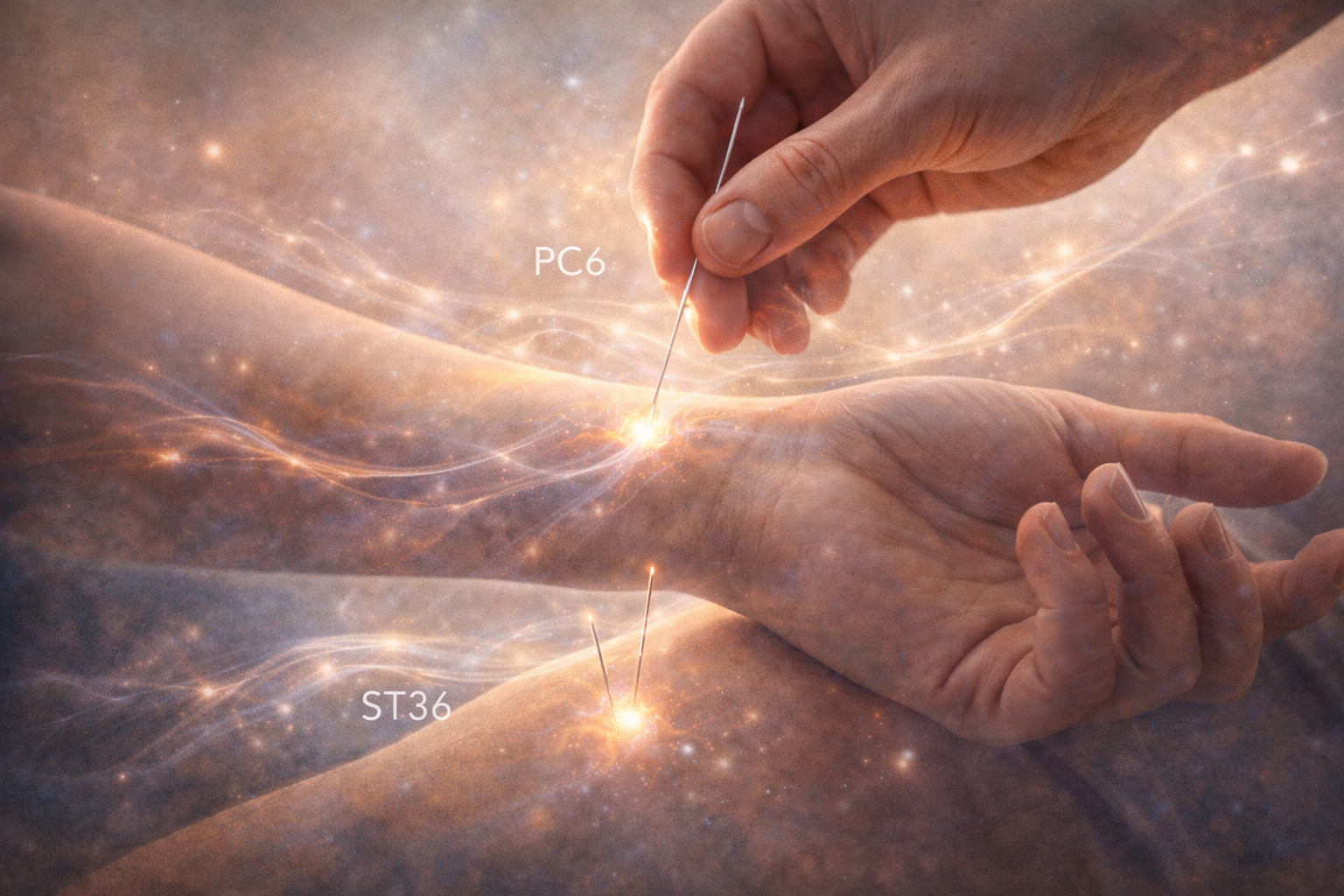
Points commonly used in clinic such as:
PC6 (Neiguan) — often used for anxiety, nausea, and chest tightness
ST36 (Zusanli) — frequently used for fatigue and immune support
have been associated with measurable autonomic changes in some studies.
Needle stimulation activates sensory fibers that project to brainstem and limbic structures involved in regulation.²
This isn’t sedation. It’s a shift toward adaptability.
2. Influencing Limbic Circuitry
The limbic system integrates threat detection, emotional salience, and reward processing. Functional MRI studies suggest acupuncture can alter activity in limbic and paralimbic regions, particularly in pain and stress-related conditions.³
The data are not uniform across every study, but they are consistent enough to suggest meaningful engagement of affective circuitry.
In Chinese medicine language, patterns such as Liver Qi stagnation often describe presentations that overlap with sympathetic dominance and emotional tension. The terminology differs. The physiology may intersect.
3. Altering Inflammatory Signaling
Dysregulation is rarely purely neural. Chronic stress shifts immune signaling and can contribute to low-grade inflammation. Emerging research suggests acupuncture may influence inflammatory mediators such as TNF-alpha and IL-6 in certain conditions.⁴
These effects are generally modest and context-dependent. They reflect modulation rather than suppression.
In Chinese herbology, formulas like:
Xiao Yao San
Huang Lian Jie Du Tang
have demonstrated anti-inflammatory and neuroimmune-modulating effects in experimental studies.⁵ Human evidence varies, but the regulatory theme is consistent.
4. Affecting Monoamines — Indirectly
Preclinical studies show acupuncture can influence dopamine turnover and receptor sensitivity under stress conditions.⁶ Human data are more indirect and typically inferred from mood and functional outcomes.
Acupuncture doesn’t appear to simply “boost” dopamine. It alters the broader stress-immune-autonomic environment in which dopamine signaling operates.
When flexibility improves, dopamine signaling often stabilizes as part of that shift.
5. Increasing Adenosine Locally
One of the clearest mechanistic findings involves adenosine. Needle insertion and manipulation increase local extracellular adenosine concentrations. Adenosine activates A1 receptors, producing localized antinociceptive effects.⁷
Adenosine also plays a role in neural inhibition and sleep pressure. Its local increase may help explain the heaviness or calm many patients describe after treatment. Just this week, three patients told me, “I feel so different — relaxed and heavy.”
Not dissociation. Not anesthesia.
A shift toward rest.
So What Is Actually Changing?
Autonomic tone adjusts. Limbic reactivity softens. Inflammatory signaling modulates. Monoamines recalibrate within that environment.
Regulation isn’t about turning one dial. It’s about restoring variability across systems.
Biological systems rarely respond in single, linear pathways. Acupuncture seems to work within that complexity rather than bypassing it.
What This Means for Patients
If acupuncture helps with mood, motivation, or reactivity, it’s not because it creates an artificial high. It may support the body’s own capacity to regulate.
For some people, that shows up as a brief euphoria after treatment. More often, it becomes something steadier — a baseline that feels less effortful to live inside.
Over time, the system may learn to shift states more efficiently. Not because it was forced, but because flexibility was supported.
Dysregulation isn’t a character trait. It’s a pattern.
Patterns can change.
Diet as Regulation Support
Diet is where regulation quietly stabilizes between treatments.
Not as a cleanse.
Not as a protocol.
As rhythm support.
For dysregulation — especially the wired-but-tired, inflamed, reactive pattern — the goal is not restriction. It’s steadiness.
Predictable blood sugar
Warm, digestible meals
Reduced inflammatory load
Fewer dramatic stimulants
No dramatic deprivation
In other words: steady input → steady output.
The nervous system learns from repetition. Meals are one of the most frequent regulatory signals we provide.
Dietary Principles for Nervous System Regulation
These are not rules. They are stabilizers.
1. Eat Warm Food — Especially in the Morning
Cold smoothies and coffee on an empty stomach can function like gasoline on a stress-biased system.
Warm, cooked foods tend to:
Reduce digestive strain
Support parasympathetic tone
Prevent mid-morning crashes
From a Chinese medicine perspective, this aligns with supporting Spleen Qi — not as metaphor, but as digestive capacity.
When digestion is steadier, the nervous system often follows.
2. Stabilize Blood Sugar
Erratic dopamine and cortisol patterns frequently track unstable glucose.
Aim for:
Protein + fat + fiber at each meal
Caffeine after food, not before
Regular eating intervals
If someone skips meals and crashes at 3 p.m., that’s rarely a willpower issue. It’s often HPA rhythm strain.
Blood sugar stability is one of the most underrated regulation tools we have.
3. Reduce Inflammatory Friction — Without Extremism
Dysregulated systems are often already reactive. Dramatic elimination diets can amplify stress.
Often helpful:
Reducing ultra-processed foods
Moderating alcohol
Minimizing large sugar spikes
Prioritizing omega-3 rich foods
Maintaining consistent hydration
Inflammation does not require punishment. It requires fewer insults.
4. Avoid Nervous System Whiplash
For some patients, the following can worsen instability:
High caffeine intake
Frequent fasting
Aggressive detox protocols
Strong antimicrobials
Very low-carbohydrate diets
Regulation first. Optimization later.
A system that cannot transition smoothly does not benefit from extremes.
A Simple Regulating Congee
Congee works well for dysregulation because it is:
Warm
Gentle
Hydrating
Easy to digest
Adaptable
It supports digestion without taxing it. And digestion and nervous system tone are not separate conversations.
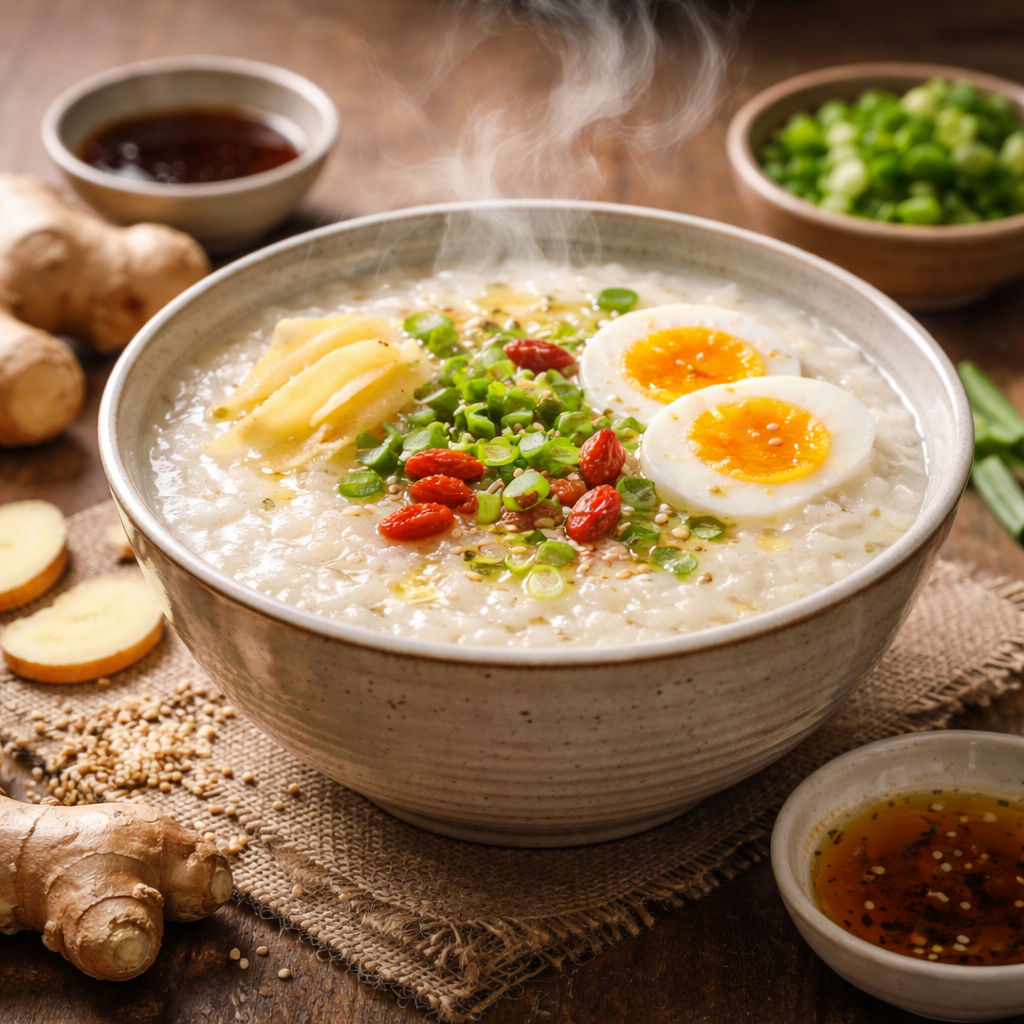
Nervous System Support Congee
Base
½ cup white rice (short-grain brown if digestion is robust)
6–8 cups water or light bone broth
Pinch sea salt
Bring to a boil, then simmer covered 60–90 minutes until porridge-like. Stir occasionally.
Add-Ins by Pattern
For sympathetic dominance (tense, wired, irritable):
Sliced ginger
Chopped scallions
Soft-boiled egg
Drizzle of sesame oil
Optional: small handful goji berries
For depletion or parasympathetic collapse (flat, fatigued):
Shredded chicken or turkey
A few red dates (jujube)
Dash tamari
Cooked carrots or sweet potato
Optional: astragalus root simmered in broth (removed before serving)
For inflammatory presentations:
Turmeric with black pepper
Wilted greens
Soft tofu
Small amount of miso stirred in after cooking
Why Congee Helps
Warm carbohydrates can support serotonin pathways indirectly.
Stable glucose prevents cortisol spikes.
Easy digestion reduces sympathetic activation.
Gentle nourishment supports vagal tone.
It isn’t a “cure”.
It’s a healthy rhythm.
And rhythm is how regulation returns.
Selected References
Choi, E. M., et al. (2013). Effects of acupuncture on heart rate variability: A systematic review. Autonomic Neuroscience.
Sato, A., et al. (2010). Neural mechanisms of autonomic responses to acupuncture stimulation. Neuroscience Research.
Hui, K. K. S., et al. (2000); Napadow, V., et al. (2007). fMRI studies of acupuncture modulation of limbic structures.
Vickers, A. J., et al. (2018). Acupuncture and inflammatory modulation.
Zhang, W., et al. (2012). Anti-inflammatory mechanisms of Xiao Yao San.
Yoon, S. S., et al. (2005). Acupuncture modulates dopamine signaling in stress models.
Goldman, N., et al. (2010). Adenosine A1 receptors mediate local antinociceptive effects of acupuncture. Nature Neuroscience.
Clinical note: Evidence strength varies by mechanism. Human autonomic and limbic data are stronger than monoamine-specific causal claims. Many neurochemical findings remain preclinical. Claims here are framed as supported but complex, not definitive.
Clarity without evidence is storytelling; evidence without clarity is noise. My work lives between the two.